
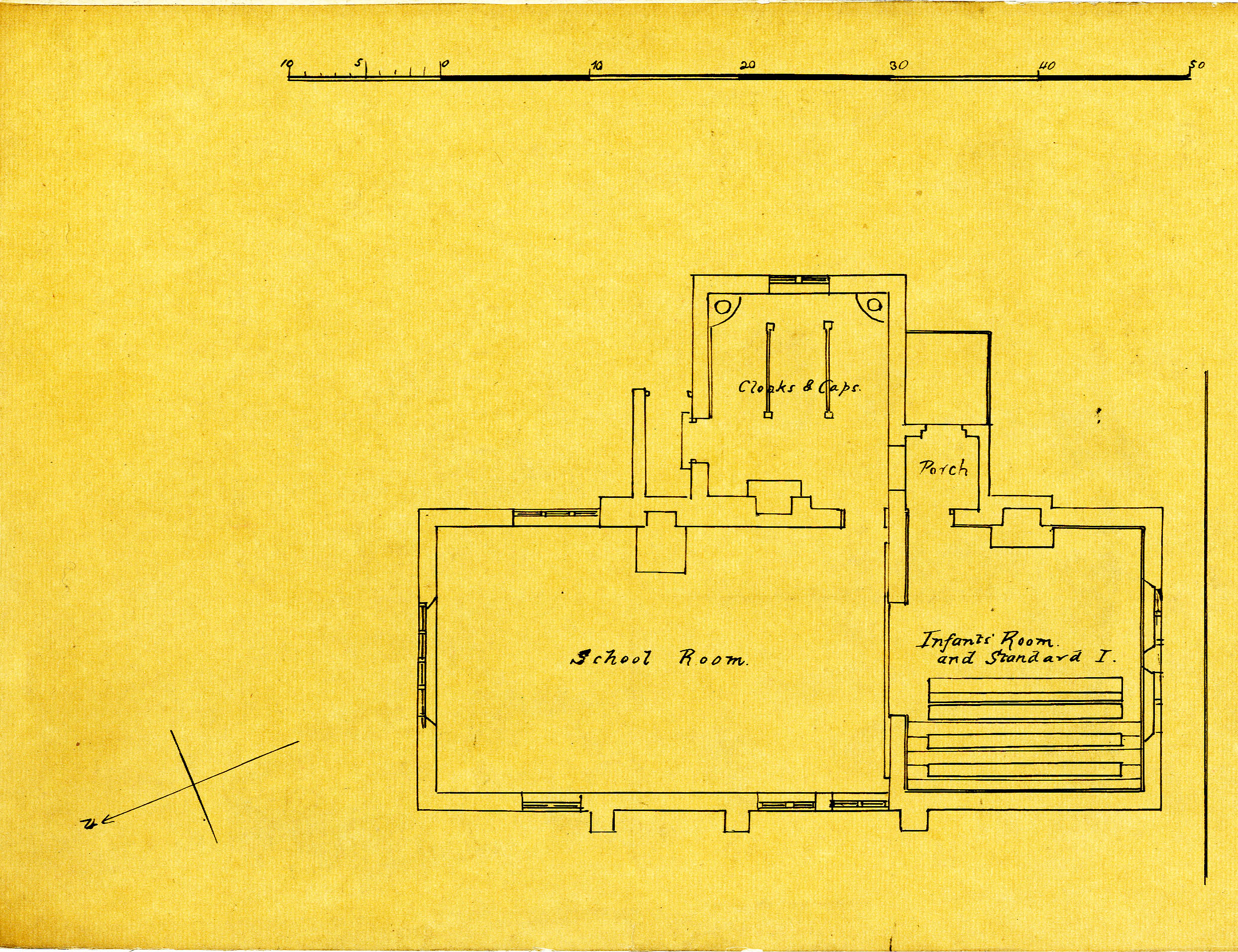
National School, Charlton (N. Wilts)
- Date of image
- c.1906
- Date uploaded
- 30 November 2010
- Number of views
- 534
- Number of comments
- 0
- Location of image
- Wiltshire & Swindon History Centre, Chippenham
- Notes
-
The National School was built in the centre of the village, to the south of the road, in 1838. Twenty years later in 1858 there were 75 children on the roll. In the 1890s there were regular visits to the school from the Dowager Countess of Suffolk and Lady Victoria Howard. This was often to examine the girls’ needlework or to present prizes.
Within the log books there are continual references to the levels of attendance. This may seem to be bordering on obsession but was of vital importance to a school then as their grants were dependent on how many children came to school every day.
There were many reasons for decreasing attendances; illness, weather and the need to go and work in the fields being the main three. Common illnesses were mumps, German measles, influenza and chicken pox. There were also cases of scarlet fever and impetigo. In 1915 the head teacher notes the very high level of toothache and neuralgia in the winter of 1915. In March 1916 the snow and cold were so bad that some of the children brought their slippers into school. The school was shut for several days in 1918 so the children could go out to pick blackberries.
In 1899 the Government Report was fair, with an average attendance of 82.6%. The staff at the time consisted of John Henry Purlott, assisted by Letitia Purlott and Mabel Purlott with Lottie Purlott as a monitress. The school was regularly visited by Lady Victoria Howard often accompanied by friends as well as the Reverend J. F. Collins. In 1900 object lessons included the Hanoverian Sovereigns, Gray’s Elegy and Father William; followed by the Tudor period in 1902 and the British Isles.
Epidemics of measles and chicken pox occurred in 1901. Further absences were usually due to bad weather and in 1904 an epidemic of mumps. Closures occasionally occurred for a concert at Charlton Park House, confirmations and point to point races at Charlton.